
Kitesurfing is an adrenaline-filled sport that lets you enjoy the power of the wind and the freedom of the sea. However, as with any extreme water sport, having the right equipment is essential for a safe and enjoyable experience. For beginners, choosing the right gear can be a challenge due to the variety of options and features available on the market.
The choice of each piece of equipment, from the kite to the harness and helmet, has a direct impact on safety, control, and comfort during practice. Starting kitesurfing with the right gear will not only make learning easier but also reduce risks, allowing you to enjoy the experience from day one.
Table of contents
What kit do we recommend for beginners?

The kite is the main component of kitesurfing equipment, as it captures the wind’s power and allows you to move across the water. Choosing the right kite is essential for beginners to learn how to control the wind safely and comfortably. There are different types and sizes of kites, each suited to various wind conditions and experience levels.
Types of kites
For those just starting in kitesurfing, it’s important to understand the most common types of kites and their characteristics:
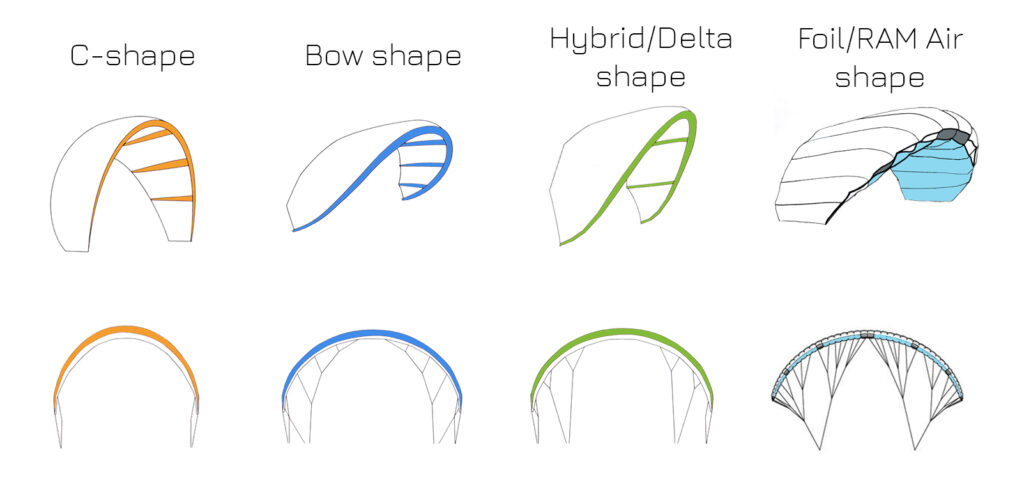
- Inflatable kites: These are the most commonly used in kitesurfing due to their stability and ease of relaunching from the water. These kites have inflatable tubes that keep them afloat in case they fall. For beginners, inflatable kites are an excellent choice because they offer good control and are easy to relaunch from the water, even in low wind conditions.
- Foil kites: These kites don’t have inflatable tubes but are made up of air chambers. They are lightweight and efficient in light wind conditions but can be harder to relaunch if they fall into the water. For this reason, beginners are advised to start with inflatable kites before trying foil kites.
- Hybrid kites: This type of kite combines features of inflatable and foil kites, offering a good balance between stability and control. While they can be suitable for intermediate and advanced kitesurfers, beginners are better off starting with inflatable kites to build their skills first.
Recommended kite sizes for beginners
The size of the kite is chosen based on the kitesurfer’s weight and wind conditions. Larger kites generate more power, while smaller ones are easier to handle in strong winds. Here’s a general guide for selecting the right kite size according to weight and wind strength:
Weight of the kitesurfer
For individuals weighing between 60 and 80 kg, recommended kite sizes are usually between 9 and 12 square meters. For beginners, it’s preferable to opt for a smaller kite, such as 9 or 10 meters, as they offer better control and are less powerful in strong wind conditions.
Wind conditions
On days with moderate wind (between 12 and 20 knots), a medium-sized kite, such as a 10-meter one, is ideal for beginners. If the wind is stronger, a smaller kite is recommended, while in lighter wind conditions, a larger kite may be necessary.
It’s important to remember that the kite size should be suited to both the wind conditions and the kitesurfer’s experience. Starting with a smaller, easier-to-control kite allows beginners to build confidence without risking losing control in strong wind conditions.
Tips to choose your first kite for kitesurfing
- Prioritize stability: Medium-sized inflatable kites offer greater stability, making learning easier.
- Consult an instructor: Before purchasing, it’s a good idea to try different sizes and types of kites under the supervision of an instructor, who can guide you on the best size for your skill level and local conditions.
- Don’t underestimate the wind’s power: It’s better to start with a smaller kite to avoid situations of overpowering.
If you want to kitesurf in Tarifa, you can rent kitesurfing kit tailored to your needs.
Control bar and security lines
The control bar is one of the key components of kitesurfing equipment, as it allows the kitesurfer to steer and control the kite. Through the bar, the kitesurfer can adjust the kite’s position and power, which affects speed, direction, and stability on the water. In addition to the bar, the system includes safety lines that enable the kite’s power to be deactivated in emergency situations. These elements are essential for safe learning and controlled practice, especially during the first days on the water.
What is the control bar and how does it work?
The control bar is a horizontal piece that the kitesurfer holds with both hands to steer the kite. It is connected to the kite by four or five lines (depending on the kite model): two power lines that hold the kite and two or three safety lines that allow for reducing or releasing power when needed. Basic movements on the bar, such as pulling on one side or the other, enable the kite’s direction to be changed and its angle adjusted relative to the wind.
Beginners will learn to use the bar to control the kite’s power, keeping it in a safe position or moving it within the “wind window” to gain or reduce force. The control bar also includes a quick-release system, allowing the kite to be disconnected if the kitesurfer loses control, preventing them from being dragged in strong wind conditions.

The importance of security lines
The safety lines are essential for safe learning in kitesurfing, as they allow the kite to lose its power in an emergency. When the quick-release system is activated, the safety lines release the tension from the power lines, leaving the kite in a safe, powerless position so it doesn’t drag the kitesurfer. This system is vital for avoiding risky situations and allows beginners to practice with greater confidence.
The safety lines should be checked regularly to ensure they are in good condition and properly connected. The instructor will teach beginners how to inspect the safety system before each session and practice activating the quick release on land to become familiar with the process.
Our tips to choose a control bar for beginners
- Look for a bar with a quick-release system: Control bars for beginners should include an easy-to-activate quick-release system. Make sure you can release the kite with a single motion in case of loss of control.
- Choose an adjustable bar: Some bars have an adjustable length, allowing them to fit different kite sizes. This is especially useful for beginners, as a versatile bar lets you try different kites without needing to switch bars.
- Get familiar with the safety system: Before heading out on the water, practice activating the quick release on land. This practice will help you feel confident using the system in the water, where conditions can be more challenging.
Maintenance for the bar and lines
A key aspect of ensuring safety in kitesurfing is the care and maintenance of the bar and lines. The lines can wear out over time, especially when used in strong wind conditions or with large kites. Before each session, it’s important to check that the lines are free of knots, cuts, or wear. It’s also recommended to rinse the bar with fresh water after each use to prevent corrosion and extend its lifespan.
Harness: Types and proper selection for beginners
The harness is one of the most important pieces of kitesurfing equipment, as it connects you to the kite and distributes the wind’s force through your body. This allows you to handle the kite without relying solely on your arm strength. Choosing the right harness is essential for a comfortable and safe experience on the water, especially if you’re new to kitesurfing. There are several types of harnesses, each with specific features suited to different levels and styles of practice.
Types of harnesses
Kitesurf harnesses are mainly divided into two types: waist harnesses and seat harnesses. Each has its own advantages, so it’s important to understand their characteristics before choosing the one that best suits your needs as a beginner.
Waist harness
This type of harness wraps around the midsection of the torso and allows for greater freedom of movement. It’s the preferred choice for intermediate and advanced kitesurfers, as it makes maneuvers and jumps easier. However, for beginners, the waist harness can be less stable and more likely to ride up on the body, which can be uncomfortable at first.
Seat harness
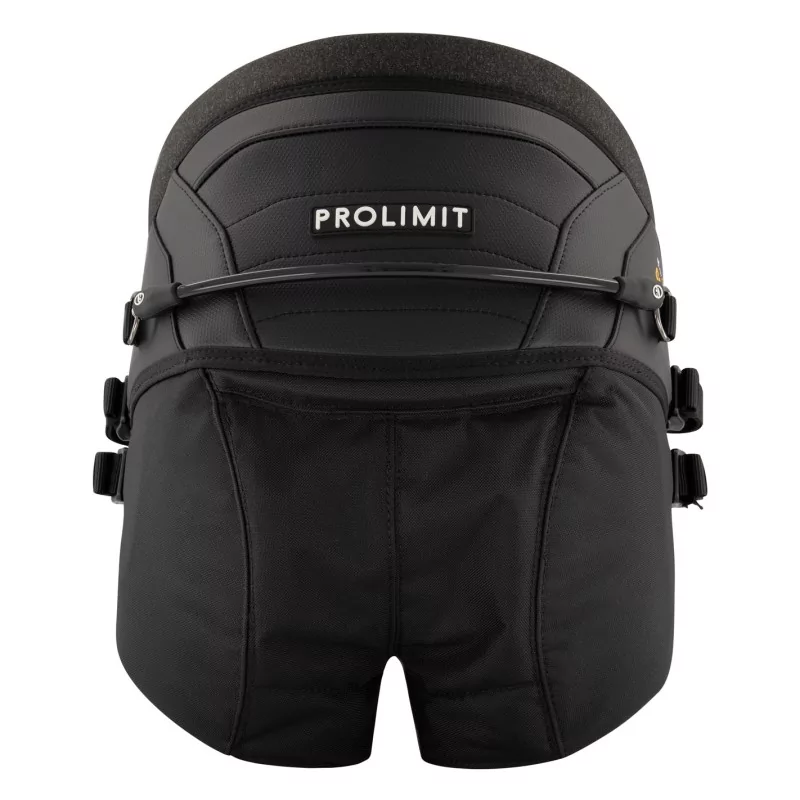
This harness fits around the waist and includes a lower section that adjusts like a seat, providing greater stability. It’s ideal for beginners, as it distributes the kite’s force more evenly and helps keep the harness in place without sliding. The added stability allows beginners to focus on controlling the kite without constantly needing to readjust the harness.
Seat harness advantages for beginners
If you’re just getting into kitesurfing, a seat harness is usually your best bet. Here are its top perks:
- More stability: With support on the bottom, the seat harness stays put and doesn’t lift up, giving you that awesome feeling of safety and control.
- Even force distribution: By spreading the wind pressure more evenly across your body, it lets beginners use less arm strength and feel way more comfortable in the water.
- Comfort during long sessions: For newbies, keeping a stable position is crucial to avoid getting tired. The seat harness takes the pressure off your back and lets you maintain a more relaxed posture, making it perfect for those long learning sessions.
How to choose a harness if you are a beginner
When it’s time to choose your first harness, it’s important to look for something comfy and adjustable. Here are some tips to help you make the best decision:
Prioritise comfort and fit
Make sure your harness fits snugly and doesn’t shift when you move the kite. A loose harness can be uncomfortable and reduce your control, so look for one that fits your body shape well.
Try the harness before buying
If possible, try out different harnesses to see which one feels the most comfy and stable for you. Everyone has a different build, so the fit can vary depending on the harness design.
Quick-release buckle
Many harnesses come with a hook that lets you quickly release the kite in case of an emergency. This feature is super important for beginners because it boosts your safety and gives you more peace of mind while you’re learning.
Harness maintenance
To make your harness last longer and keep it working great, rinse it with fresh water after every session to prevent salt and sand buildup, which can damage the seams and materials. Also, be sure to dry it thoroughly and store it in a cool, dry place.
Kitesurf board: Size and recommended characteristics
The board is what lets you glide over the water, powered by the kite’s force. Choosing the right board is crucial, especially for beginners, because a more stable and easy-to-handle board makes the learning process smoother and helps you build confidence. There are different types of kitesurf boards, each with specific features that suit various riding styles and experience levels.
Types of kitesurf boards
To kick off your kitesurfing journey, it’s important to know the most common types of boards and their features:
Twintip

The Twintip is the most popular board in kitesurfing and the top choice for beginners. It’s symmetric, which means you can ride in both directions without having to switch your foot positions. Its design offers fantastic stability, making it easier to balance and maneuver—perfect for learning. Plus, it’s super versatile and works great in a wide range of wind and wave conditions.
Directional

Also known as a surfboard or wave board, the directional board has a design similar to a surfboard and is mainly used in waves and for advanced riding styles. Unlike the twintip, it can only be ridden in one direction and requires changing your foot positions to turn. This type of board is more advanced and recommended for those who already have some kitesurfing experience and want to dive into wave riding styles.
Board size recommended for beginners
The size of your board is super important when you’re learning to kitesurf. Bigger boards offer more stability and buoyancy, making it easier to balance and letting you focus on controlling the kite without constantly worrying about wiping out. Below, we’ve got a general guide to help you pick the perfect board size for beginners:
Weight of the kitesurfer
For people between 60 and 80 kg, a board between 135 and 145 cm in length is recommended. Larger boards (close to 145 cm) are ideal for beginners as they provide a bigger support surface and help improve balance in the water.
Wind conditions and skill level
Larger boards are also great in light wind conditions since they have more surface area and glide more easily. That’s why beginners often start with bigger boards, helping them progress their skills in a wide range of wind conditions.
Key characteristics for beginners
When selecting your first kitesurf board, it’s important to keep in mind certain features that will make the learning process easier:
- Stability: Bigger boards with a wider design are usually more stable, which helps you keep your balance and lets beginners focus on controlling the kite without worrying too much about falling off the board.
- Flexibility: A board with a bit of flex is perfect for newbies because it absorbs impacts better and gives you a smoother ride. This feature makes learning easier by providing a more comfortable experience in the water and helps reduce fatigue.
- Fins and grip: Kitesurf boards have fins on the bottom that provide grip and stability. For beginners, it’s best to choose a board with medium-sized fins that offer good control without making maneuvering too difficult.
Tips to choose your first kitesurfing board
- Choose a bigger board: If you’re just starting out with kitesurfing, a larger and wider board is the best choice. It offers more buoyancy and stability, which are key for learning and building confidence on the water.
- Consult with an instructor: Before buying, consider renting or trying out different board sizes under the supervision of an instructor. This will allow you to experiment and find the size and style that best suits your needs.
- Choose a Twintip: As a beginner, the most recommended option is to start with a twintip board. This type of board is versatile and will let you progress in your learning without any extra hassle.
Board maintenance
To extend the life of your board, it’s important to maintain it properly. Rinse your board with fresh water after each session to remove salt and sand, as these can wear down the materials. Also, make sure to dry it thoroughly and store it in a place protected from the sun and extreme temperatures, which could damage its structure.
Quick-release system and other safety accessories:

Safety is a top priority in kitesurfing since the sport involves handling a powerful kite in open wind and water conditions. Having a quick-release system and other safety accessories is essential to minimize risks and enjoy kitesurfing in a safe and controlled way.
What is the quick-release system?
The quick-release system is a safety mechanism on the control bar that lets you disconnect the kite in case of an emergency. This system releases the tension from the kite lines, causing the kite to lose power and preventing it from dragging you in strong wind conditions or if you lose control. It’s a crucial feature for beginners because it allows you to deactivate the kite instantly when needed, avoiding accidents and keeping you safe.
The quick-release system is super simple—it usually has a button or lever on the control bar or your harness. When you activate it, the safety lines cut down the kite’s power, letting you regain control or, if needed, head back to shore safely.
Other safety accessories we recommend
Besides the quick-release system, there are other safety accessories that are especially useful for beginners and help make kitesurfing safer and more comfortable.
- Safety leash: The leash is a short line that connects you to the kite, making sure that if you release the bar, the kite doesn’t completely separate and can be retrieved. It’s important to ensure the leash also has a quick-release system for extreme situations. This accessory is crucial for beginners to keep the kite close and avoid worrying about losing it in the water.
- Life-jacket: A floatation vest gives you that extra help to stay afloat and is super useful for beginners who are still getting the hang of controlling the kite and board.
- Protective helmet: A helmet is another important accessory because it protects your head from possible hits with the kite, board, or water. Even though kitesurfing usually doesn’t involve direct contact with hard objects, wearing a helmet is an essential safety measure, especially for beginners. Water sports helmets are lightweight and designed not to interfere with your visibility or movement, allowing you to ride more safely.
Tips for using and maintaining safety accessories:
- Get to know the quick-release system: Before you hit the water, practice using the quick-release on land. This will help you get comfortable with how it works and know exactly how to react in an emergency. Remember, this system is super important for your safety and should be easy to activate whenever you need it.
- Check your gear before each session: Before every kitesurfing session, make sure your quick-release system and safety leash are in good shape and free from wear. It’s essential that your safety gear works perfectly every time you hit the water.
- Ensure a comfortable fit for your gear: Your vest and helmet should fit snugly on your body to make sure they’re effective and comfy. A vest that’s too loose or a helmet that moves around can be uncomfortable and less safe. Try on your gear before hitting the water and make sure it fits your build well.
Importance of safety accessories when learning:
For beginners, having these safety accessories is key to feeling secure and building the confidence you need on the water. The quick-release system, leash, floatation vest, and helmet not only protect you physically but also give you peace of mind knowing you’re ready to handle any unexpected situation.
For beginners, having these safety accessories is key to feeling secure and building the confidence you need on the water. The quick-release system, leash, floatation vest, and helmet not only protect you physically but also give you peace of mind knowing you’re ready to handle any unexpected situation. Plus, safety accessories let beginners focus on learning and enjoying the kitesurfing experience without worrying too much about the risks. These safety elements create a more controlled learning environment where you can progress confidently and without distractions.
6. The wetsuit

Besides the board, bar, and kite, it’s generally recommended to wear a wetsuit and helmet. These are two important pieces to ensure a safe and comfortable kitesurfing experience. Both accessories offer protection and let you enjoy riding in different weather and water conditions. For beginners, investing in a good helmet and a suitable wetsuit is essential, as they will improve safety and comfort in the water.
The wetsuit provides protection and thermal comfort
A wetsuit is a must for anyone kitesurfing in cold waters or strong winds. Made from an insulating material called neoprene, it keeps your body warm and protects your skin from prolonged exposure to water and wind. The thickness of the wetsuit varies depending on the water temperature and the climate of your kitesurfing spot.
Benefits of a good wetsuit for beginners:
Thermal comfort
A good wetsuit helps maintain your body temperature and prevents heat loss in cold water. This lets you focus on learning and enjoying the experience without worrying about the cold.
Protection against wind & sun
The wetsuit acts as a barrier against the wind, which is especially helpful on windy days as it prevents wind chill. Additionally, the wetsuit also protects your skin from UV rays, reducing the risk of sunburn.
Mobility
Wetsuits designed for water sports offer great mobility. Look for a suit that fits snugly to your body but still allows you to move easily, especially in your arms and shoulders.
Choosing the wetsuit thickness
The thickness of the wetsuit varies depending on the water temperature and the season. Here’s a general guide to help you choose the right thickness:
- 2-3 mm: Perfect for warm or temperate waters (20°C or above). This thickness offers light thermal protection without overheating your body.
- 3-4 mm: Suitable for waters between 15°C and 20°C. This intermediate thickness provides a great balance of insulation and flexibility.
- 5 mm or More: Recommended for cold waters (15°C or below). This thicker wetsuit provides extra thermal protection, making it ideal for kitesurfing in winter or in areas with cold waters.
It’s important to remember that the fit of your wetsuit is key to keeping you warm. A suit that’s too loose will let cold water in, while one that’s too tight might restrict your movements and feel uncomfortable.
Using and maintaining your helmet and wetsuit
- Rinse with fresh water: After each session, rinse your helmet and wetsuit with fresh water to remove salt, sand, and other residues that can damage the materials. This is especially important for neoprene, as salt can wear it down and make it stiff over time.
- Proper drying: Your helmet and wetsuit should be dried in the shade and in a well-ventilated area. Avoid exposing them to direct sunlight, as UV rays can damage the neoprene and weaken its elasticity.
- Regular inspection: Make sure to regularly check your helmet and wetsuit for any damage, like tears or wear on the seams. If you spot any issues, repair them or consider replacing the gear to maintain its functionality and safety.
Final recommendations for choosing your kitesurfing gear
Choosing the right kitesurfing gear is essential for a safe, comfortable, and fun experience in this sport. As a beginner, you might feel overwhelmed by the variety of options and specifications available on the market. To make the process easier, here are some final tips to help you make informed and smart decisions about your first kitesurfing gear.
- Try before buying
- Ask experts or your teachers
- Consider renting the equipment first
- Consider buying second hand
- Prioritize quality and durability
- Make sure the gear is adequate for beginners
- Make use of the kitesurfing community’s recommendations
- Invest in safety accessories from day 1
Consider the climate ad temperature of where you will be surfing
If you plan to kitesurf in cold waters, make sure to invest in a wetsuit suitable for protecting you from the cold and wind. If you’re practicing in warm waters, a thinner wetsuit or a neoprene vest might be enough. Adapting your gear to the local climate and conditions will allow you to enjoy your sessions more comfortably and safely.